Last verified: April 2026
The Bill That Changed Everything
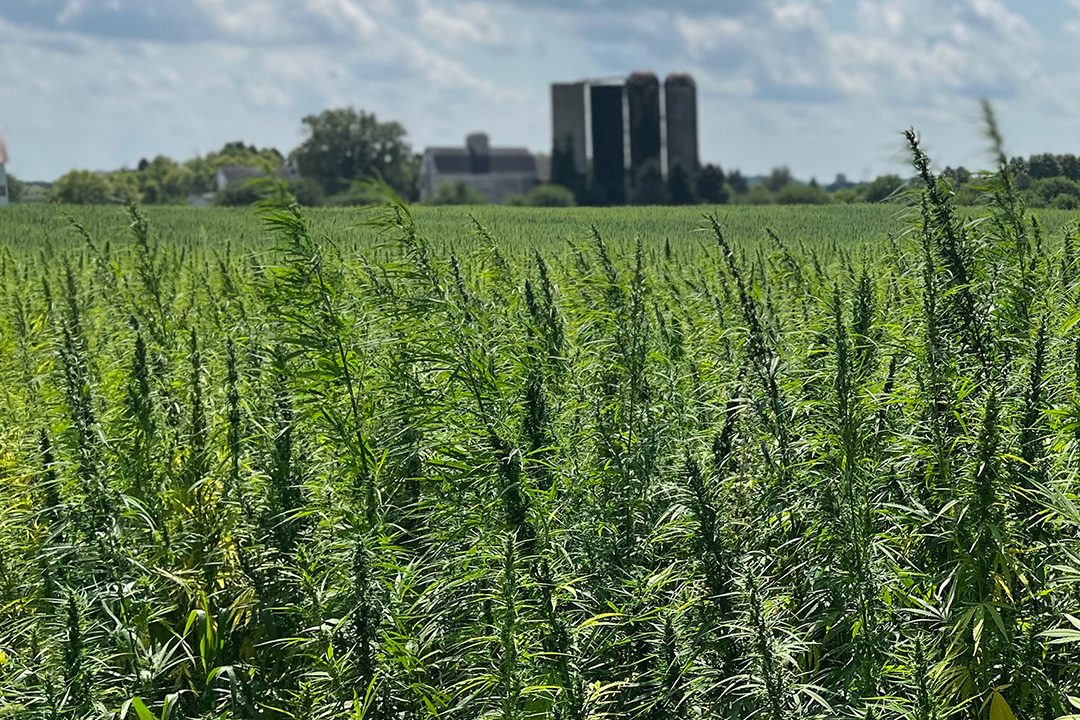
On June 10, 2019, Governor Greg Abbott signed House Bill 1325, the Texas Hemp Farming Act. Authored by Rep. Tracy King (D-Uvalde) and Sen. Charles Perry (R-Lubbock), the bill passed both chambers unanimously. Its intent was straightforward: allow Texas farmers to grow industrial hemp and sell CBD products, mirroring the federal 2018 Farm Bill.
HB 1325 defined legal hemp as Cannabis sativa L. containing no more than 0.3% delta-9 THC by dry weight. It created Agriculture Code Chapter 113 (establishing a Texas Department of Agriculture hemp program) and Health & Safety Code Chapter 443 (giving the Department of State Health Services authority over consumable hemp products). Texas joined the national hemp economy.
Nobody in the Capitol anticipated what would happen next.
The Unintended Consequences
Hemp and marijuana come from the same plant species. They are visually and olfactorily identical. The only way to distinguish legal hemp from illegal marijuana is laboratory testing — and not just any test. Crime labs needed to quantitate THC concentrations precisely, not simply detect its presence as they had done for decades.
The Texas Department of Public Safety estimated it would need $5.5 million in new equipment to upgrade labs statewide. Until that happened, prosecutors could not reliably prove that a substance exceeded the 0.3% threshold.
This bill will essentially legalize marijuana. We will not be able to tell the difference between hemp and marijuana.
Dr. Peter Stout, President of Houston Forensic Science Center, June 2019
The effect was immediate and dramatic. Misdemeanor marijuana prosecutions cratered across the state. In 2019 alone, marijuana-related arrests dropped by approximately 45,000 — a 30% decline. Many district attorneys, unable to prove their cases met the new statutory threshold, simply stopped prosecuting low-level possession. Harris County DA Kim Ogg had already implemented a cite-and-release program; now even hardline jurisdictions found themselves unable to move forward with cases.
The Market Nobody Predicted
The 0.3% delta-9 threshold, calculated by dry weight rather than absolute milligrams, turned out to be far more permissive than legislators imagined. Entrepreneurs quickly discovered they could manufacture products containing pharmacologically significant amounts of THC — enough to produce genuine psychoactive effects — while staying within the dry weight loophole. Then the delta-8 explosion created an entirely parallel cannabis economy.
A 2025 report commissioned by the Texas Hemp Industries Association and prepared by Whitney Economics estimated the total annual revenue of the Texas hemp-derived THC market at $5.5 billion:
| Category | Estimated Annual Revenue |
|---|---|
| Retail sales | $4.3 billion |
| Manufacturing | ~$960 million |
| Wholesale | ~$300 million |
| Total | $5.5 billion |
Economic Footprint
The Whitney Economics report estimated a total economic impact of $10.3 billion (a 2.4x multiplier), with 8,500+ businesses, 53,300 jobs, and $2.1 billion in wages flowing through the Texas economy. An estimated $268 million in annual sales tax revenue reaches state and local coffers. On the agricultural side, 750+ licensed Texas farmers cultivate up to 3,300 acres of hemp.
The Whitney Economics figures were commissioned by the Texas Hemp Industries Association, an advocacy group. While the firm is respected in cannabis analytics, the data should be understood as industry-favorable estimates rather than independent government analysis.
Texas Is Not Alone
Texas’s hemp Wild West has a close cousin in the Southeast. North Carolina runs an even more wide-open intoxicating-hemp market — an estimated $3.2–$4 billion annually with effectively no state minimum age, no potency cap, no licensing regime, and no testing rule. NC’s prohibition-with-hemp-flood profile mirrors Texas’s, except NC layers in a sovereign tribal cannabis retailer (Great Smoky Cannabis Co. on the Eastern Band of Cherokee Indians’ Qualla Boundary) that has sold to all adults 21+ since September 2024. Both states face the same November 12, 2026 federal cliff under Section 781. See CannabisNC.org’s Hemp Wild West for the parallel.
What Comes Next
This $5.5 billion market now faces simultaneous threats from multiple directions. The Abbott-Patrick legislative battle produced executive orders and DSHS rules that have already banned THCa flower. The federal Section 781 threat could eliminate up to 95% of existing products by November 2026. And the Texas Supreme Court case on delta-8's legal status remains pending.
What began as a bipartisan agricultural bill has become the most consequential and contested piece of cannabis policy in Texas history.
Official Sources
- HB 1325 — Texas Hemp Farming Act (86th Legislature)
- Texas Department of Agriculture — Hemp Program
- DSHS — Consumable Hemp Program
For in-depth cannabis education, dosing guides, safety information, and research summaries, visit our partner site TryCannabis.org